


TAZUMA — The Heart of every Machine. Fuerza que dura, Power that Lasts — is a line of AGM batteries engineered for vehicles and equipment with standard electrical systems — daily drivers, commuters, start-stop equipped vehicles, and work vehicles upgrading from traditional flooded batteries to AGM. TAZUMA AGM batteries use Absorbent Glass Mat construction, which eliminates the maintenance, acid spills, and corrosion issues associated with traditional flooded lead-acid batteries — an upgrade that improves both safety and reliability for passenger vehicles and commercial equipment alike. TAZUMA batteries are built to Start&Stop AGM specifications, making them a direct fit for the growing number of modern vehicles equipped with idle start-stop systems. The TAZUMA Automotive Collection currently covers BCI group sizes 47, 48, 49, and 94R — with group 24F arriving shortly — fitting a wide range of popular passenger vehicles, SUVs, and light trucks. A TAZUMA Heavy Duty Collection covering group sizes 31T, 31 Deep Cycle, and 65 is in development for commercial starting, auxiliary power, and deep-cycle applications — extending the flooded-to-AGM upgrade path into work trucks, fleet vehicles, marine, and jobsite equipment. Every TAZUMA battery is backed by direct warranty support, in-house battery testing, and the same technical infrastructure that supports the Odyssey TPPL and broader EnerSys product lines carried by West Coast Batteries.
Why TAZUMA Exists
West Coast Batteries has spent nearly 30 years building expertise in high-performance battery applications. The core of that business is Odyssey — EnerSys's Thin Plate Pure Lead line built for extreme-duty, high-parasitic-load, and mission-critical use. WCB also carries other EnerSys industrial and commercial lines, along with Optima for buyers who prefer that brand for their performance applications. That depth of experience gave WCB a clear understanding of where the line sits between applications that genuinely require high-performance construction and applications that do not.
But not every vehicle needs the extreme performance that Thin Plate Pure Lead batteries are engineered to deliver. A stock-configuration sedan, a commuter SUV with no aftermarket electronics, a family vehicle with a standard start-stop system — these vehicles draw from the battery primarily at startup and during brief idle-stop cycles, then rely on the alternator for everything else while running. They do not subject the battery to deep discharge cycles, extended engine-off accessory loads, or extreme temperature demands. For these applications, TPPL construction is not wrong — but it is more than the vehicle requires.
WCB recognized that gap in its own lineup. The expertise to guide standard-duty buyers was there, but the product was not. Those buyers went to auto parts chains and bought whatever was on the shelf — with no specialist guidance and no consistency in quality. At the same time, WCB saw a growing number of work vehicle and equipment operators looking to move from traditional flooded batteries to AGM — not because they needed high-performance TPPL, but because they wanted to eliminate the maintenance burden, acid spill risk, and corrosion issues that come with flooded construction. Without compromising on the performance and quality standards that define every product WCB carries, TAZUMA addresses both of these needs — reliable engine starting and standard start-stop cycling for everyday vehicles, and a clean upgrade path from flooded to AGM for work vehicles and equipment where improved safety and reduced maintenance matter as much as performance.
Who TAZUMA Is Built For — and Who It Isn't
TAZUMA Automotive batteries are designed for two primary audiences. The first is owners of passenger vehicles, SUVs, crossovers, and light trucks with stock or near-stock electrical systems — including vehicles with factory start-stop systems, which cycle the battery more frequently than older platforms but still operate within the design parameters of a quality Start&Stop AGM battery. The defining characteristic is that the battery's primary job is engine starting and standard start-stop cycling, with electrical accessories powered by the alternator while the engine is running.
The second audience is work vehicle and equipment operators who are upgrading from traditional flooded lead-acid batteries to AGM. This is a safety and reliability upgrade as much as a performance one. AGM construction eliminates free liquid electrolyte, which means no acid spills during handling or in the event of case damage, no corrosion from acid vapor on terminals and surrounding components, and no maintenance schedule for checking or topping off fluid levels. For fleet trucks, service vehicles, construction equipment, and any application where batteries are installed in shared workspaces or handled regularly, the move from flooded to AGM reduces operational risk. The upcoming TAZUMA Heavy Duty Collection in group sizes 31T, 31 Deep Cycle, and 65 is designed specifically to extend this upgrade path into commercial and industrial applications.
Across both audiences, TAZUMA covers daily commuters, family vehicles, second cars, vehicles with factory-equipped start-stop, light-duty work trucks, and commercial equipment operating on standard electrical loads.
TAZUMA is not designed for vehicles with heavy aftermarket parasitic loads, dual-battery configurations, emergency or public-safety vehicles, or any application where the battery must sustain deep discharge and rapid recovery cycles well beyond normal start-stop duty. Those applications call for a different class of battery technology — which is covered in the decision framework below.
What Makes TAZUMA a Quality AGM
All AGM batteries share a core construction principle: the electrolyte is absorbed into fiberglass mat separators rather than sitting as free liquid, which makes the battery spill-proof, more vibration-resistant, and maintenance-free compared to traditional flooded batteries. But AGM is a construction category, not a quality standard. The performance gap between a well-built AGM and a poorly built one is significant — and it comes down to plate quality, separator compression, and manufacturing discipline.
TAZUMA batteries are built to Start&Stop AGM specifications, meaning they are designed to handle the charge-discharge cycling patterns of modern vehicles — including those with idle start-stop systems — while maintaining consistent starting performance across a wide operating temperature range.
To understand where TAZUMA fits in the AGM landscape, it helps to know that not all AGM batteries are built the same way. Most AGM batteries — including TAZUMA — use conventional lead-alloy plates. A smaller category called TPPL (Thin Plate Pure Lead) uses plates made from 99.99% pure lead that are thinner and packed more densely into the case. TPPL is a specialized AGM construction that dramatically increases plate surface area, which enables faster charge acceptance, deeper cycling capability, and more stable voltage under heavy electrical loads. Batteries like the Odyssey line use TPPL construction. The tradeoff is that TPPL batteries are engineered for higher-demand applications and are priced accordingly.
The distinction matters because it defines where each type of AGM belongs. For a vehicle that starts the engine, handles normal start-stop cycling, hands off to the alternator, and does not subject the battery to deep discharge or extended engine-off accessory loads, standard AGM construction delivers the performance the application requires. TPPL construction becomes the right answer when the application demands more — heavier parasitic loads, deeper cycling, extreme operating conditions, or mission-critical reliability.
The practical differences show up in three areas. First, charge recovery: TPPL batteries recover from partial discharge significantly faster, which matters in high-cycling or heavy-load applications but is not a limiting factor for a daily driver that stays near full charge through normal alternator operation. Second, deep-cycle tolerance: TPPL batteries tolerate repeated deep discharges far better than standard AGM, but a properly matched starting battery in standard-duty service should rarely experience deep discharge in normal use. Third, service life under stress: TPPL batteries maintain performance longer under demanding conditions, but a standard AGM in a standard-duty application does not face those conditions.
How to Know Whether TAZUMA Is the Right Fit
The decision between a quality standard AGM like TAZUMA and a TPPL battery like those in the Odyssey line comes down to one question: what does your vehicle's electrical system actually demand from the battery?
| Application Characteristic | TAZUMA AGM | TPPL (e.g., Odyssey) |
|---|---|---|
| Primary battery demand | Engine starting + standard start-stop cycling | Starting + sustained accessory loads + deep cycling |
| Factory start-stop system | Yes — designed to Start&Stop AGM spec | Yes — also handles start-stop, plus heavier duty beyond it |
| Aftermarket electronics (dash cam, sound system, lighting) | None or minimal | Moderate to heavy |
| Engine-off accessory use | Rare or brief | Frequent or extended |
| Deep discharge frequency | Seldom (normal use) | Regular (by design) |
| Operating environment | Standard road conditions, daily driving | Extreme heat, cold, vibration, or off-road |
| Vehicle electrical system | Stock or near-stock | Modified, upgraded, or high-demand |
| Application examples | Daily commuter, family SUV, start-stop sedan, second car, light-duty truck, work vehicle upgrading from flooded | Work truck with inverter, overland build, emergency vehicle, marine dual-purpose |
| Upgrading from flooded lead-acid | Direct upgrade — same fitment, no maintenance, no acid spill risk | Upgrade when application also demands deep cycling, heavy loads, or mission-critical reliability |
The logic is straightforward. If your vehicle has a stock electrical system — including factory start-stop — and the battery's primary job is starting the engine and handling normal cycling, TAZUMA is the technically correct AGM for that application. If your vehicle has aftermarket electronics that draw from the battery with the engine off, if you operate in temperature extremes, if reliability is mission-critical, or if the battery must handle deep-cycle duty, the application calls for TPPL construction.
This is not a quality hierarchy. It is an engineering-match decision. Choosing TAZUMA for a standard-duty application follows the same logic as choosing the correct tire for a sedan versus a truck — both are quality products, built for different jobs.
The TAZUMA Automotive Collection
The TAZUMA Automotive Collection covers the most common BCI group sizes for passenger vehicles, SUVs, crossovers, and light trucks in the North American market.
| Model | BCI Group | CCA | Ah (20hr) | Reserve Capacity (min) | Terminal |
|---|---|---|---|---|---|
| TAZUMA AGM47 | 47 (H5/L2) | 640 | 60 | 100 | Top Post (SAE) |
| TAZUMA AGM48 | 48 (H6/L3) | 720 | 70 | 120 | Top Post (SAE) |
| TAZUMA AGM49 | 49 (H8/L5) | 850 | 92 | 160 | Top Post (SAE) |
| TAZUMA AGM94R | 94R (H7/L4) | 800 | 80 | 140 | Top Post (SAE) |
| TAZUMA AGM24F | 24F | 710 | 70 | 120 | Top Post (SAE) |
The AGM47, AGM48, AGM49, and AGM94R are available now. The AGM24F is arriving shortly.
These group sizes collectively cover a broad cross-section of the most popular vehicles on U.S. roads — from compact sedans and midsize SUVs to full-size trucks. BCI group size is determined by your vehicle's battery tray dimensions and terminal configuration. If you are unsure which group size fits your vehicle, the battery recommendation tool at WCBatteries.com or the WCB support team can confirm the correct match.
TAZUMA Heavy Duty Collection — Coming Soon
TAZUMA is expanding beyond automotive starting applications with a Heavy Duty Collection designed for commercial, marine, and auxiliary-power use cases.
The Heavy Duty Collection will include BCI Group 31T for heavy-duty starting applications, Group 31 Deep Cycle for sustained auxiliary and house loads, and Group 65 for commercial vehicles and fleet applications where Group 65 fitment is specified.
For many of these applications, the current battery in service is a traditional flooded lead-acid. The TAZUMA Heavy Duty Collection provides a direct upgrade path — same BCI group fitment, but with the safety, reliability, and maintenance advantages of AGM construction. No more acid checks, no corrosion from electrolyte vapor, no spill risk during installation or servicing. For fleet operators, jobsite managers, and marine owners who have been running flooded batteries because a quality AGM alternative was not available at the right performance tier, TAZUMA Heavy Duty is built for that transition.
Specifications and availability will be announced as each product is finalized.
What to Know Before You Buy
TAZUMA AGM batteries are sealed and maintenance-free. There is no electrolyte to check or top off, and the spill-proof construction allows installation in any orientation the battery tray requires.
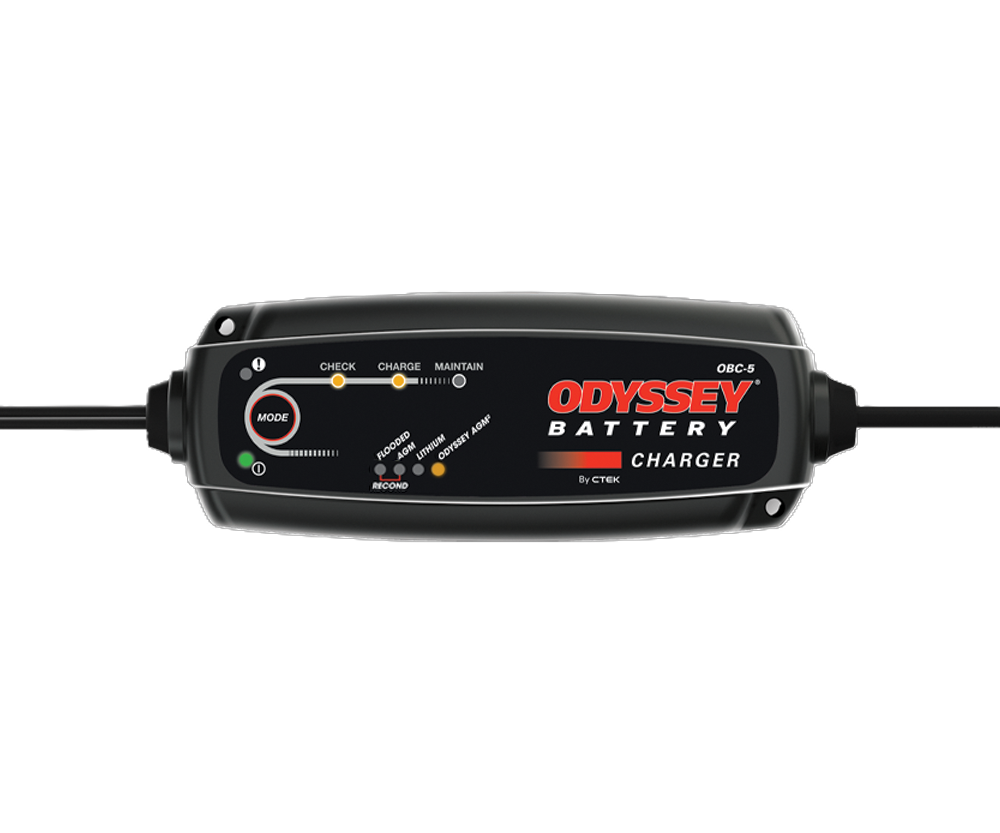
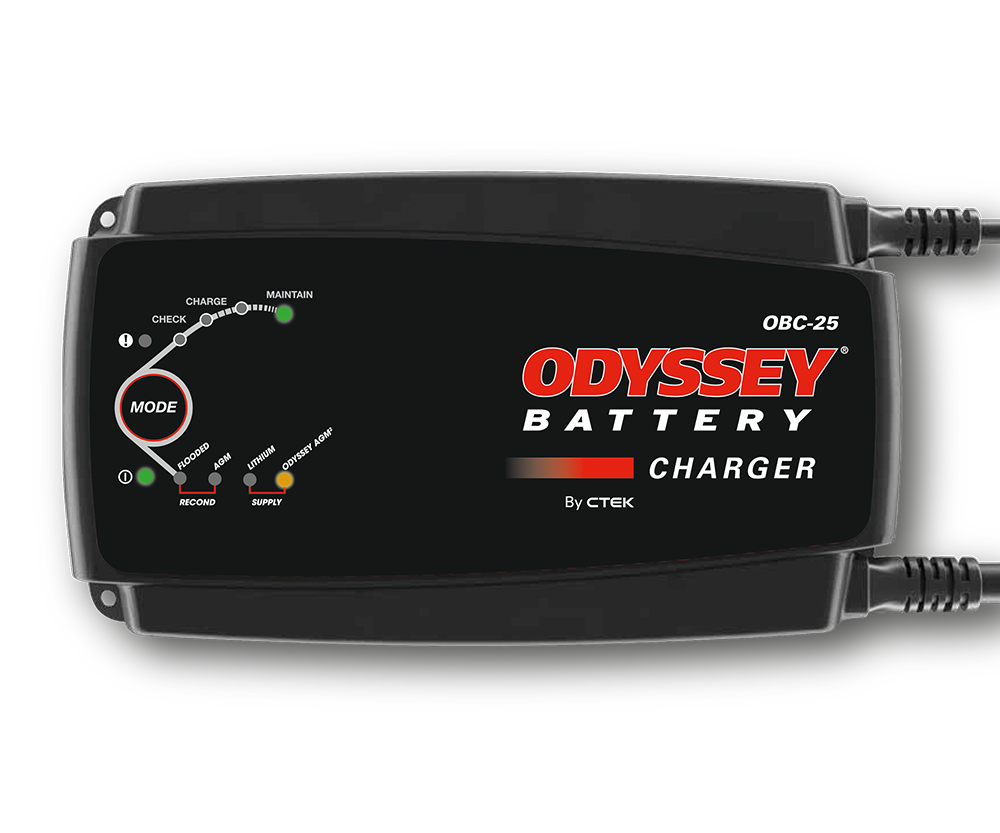
Charging matters. Like all AGM batteries, TAZUMA requires a charger with an AGM-compatible setting. Standard flooded-battery chargers can overcharge AGM batteries, which damages the separators and shortens battery life. If you use a maintainer during storage or periods of infrequent driving, confirm it has an AGM mode.
Fitment is non-negotiable. Always match the BCI group size to your vehicle's specification. A battery that does not physically fit the tray, or that uses the wrong terminal configuration, creates safety and reliability risks that no amount of battery quality can overcome.
TAZUMA Automotive batteries carry a 24-month full-replacement warranty covering manufacturing defects. Deep Cycle and Dual Purpose batteries in the upcoming Heavy Duty Collection will carry an 18-month full-replacement warranty. Warranty claims are processed directly through West Coast Batteries — the battery is tested in-house using industry-standard conductance testing, and approved claims are replaced at no charge. WCB handles the entire process from intake to resolution.
When TAZUMA Is Not the Right Answer
TAZUMA AGM batteries are not designed for every application, and using them outside their intended duty profile will result in shortened life and potential failure. Knowing the boundaries is as important as knowing the fit.
Do not use TAZUMA as a deep-cycle battery in applications that regularly discharge below 50% state of charge. The upcoming TAZUMA Heavy Duty Deep Cycle model is designed for that duty — the Automotive line is not.
Do not use TAZUMA in applications with significant parasitic loads — aftermarket electronics, inverters, refrigerators, or auxiliary lighting that draw from the battery with the engine off for extended periods. These loads require faster charge recovery and deeper cycling tolerance than standard AGM construction provides.
Do not use TAZUMA in emergency vehicles, public-safety vehicles, or any application where battery failure creates a direct safety risk. These are mission-critical applications that require TPPL construction.
Do not use TAZUMA as a deep-cycle house battery in marine or RV applications. The Automotive line is a starting battery. When the TAZUMA Heavy Duty Deep Cycle becomes available, it will serve that role — but the automotive SKUs are not substitutes.
If your application falls into any of these categories, a TPPL battery is the correct product. West Coast Batteries carries the full Odyssey line across all three tiers — ODX (Extreme), ODP (Performance), and ODS (Sport) — as well as Optima for buyers who prefer that brand. The WCB product team can help match the right battery to your specific vehicle and use case.
What Most Battery Guides Get Wrong
Most battery buying guides frame the decision as a quality ladder — good, better, best — with standard AGM at the bottom and TPPL at the top. That framing is misleading because it implies that choosing a standard AGM is settling for less.
As a specialist that carries both standard AGM and TPPL products and supports customers across the full range of applications, West Coast Batteries sees where that framing breaks down. The most common mismatch in the battery market is not defective products — it is buyers choosing batteries based on brand reputation or price tier rather than application fit. A standard AGM installed in a high-demand application fails prematurely because it was never designed for that duty cycle. A premium TPPL battery installed in a stock daily driver works fine but the buyer never accesses the performance characteristics that justify the engineering — the battery is overqualified for the job.
The question is not "which battery is best?" — it is "which battery matches the electrical demand profile of this specific vehicle?" That distinction requires someone who understands both sides of the product spectrum and can draw the line honestly. Most of the battery market does not draw that line clearly, because most retailers carry one tier and sell from it regardless of application.
TAZUMA exists because WCB does draw that line. WCB carries TAZUMA for standard-duty applications and Odyssey for high-demand applications — not because one is better than the other, but because they are engineered answers to different technical questions. The job is matching the product to the demand, not defaulting to whatever is in stock.
TAZUMA AGM batteries are available now at WCBatteries.com in BCI group sizes 47, 48, 49, and 94R, with group 24F arriving shortly and the Heavy Duty Collection to follow. Every TAZUMA battery is backed by WCB's direct warranty support, in-house testing, and the same technical expertise that has made West Coast Batteries a trusted name in battery performance for nearly 30 years.
If you are unsure whether TAZUMA is the right fit for your vehicle, the recommendation tool at WCBatteries.com and the WCB support team can walk you through the decision based on your specific application. The right battery is the one that matches your vehicle's actual electrical demand — and WCB is here to help you make that match correctly.
If you are unsure whether TAZUMA is the right fit for your vehicle, the connect with Rafa the Battery Expert. The right battery is the one that matches your vehicle's actual electrical demand — and WCB is here to help you make that match correctly. TAZUMA. The Heart of every Machine. Fuerza que dura.

