


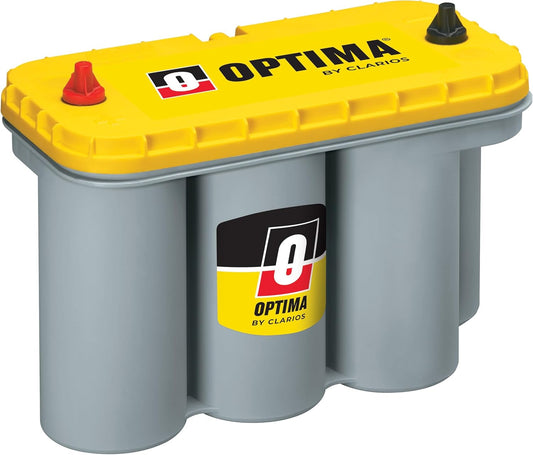
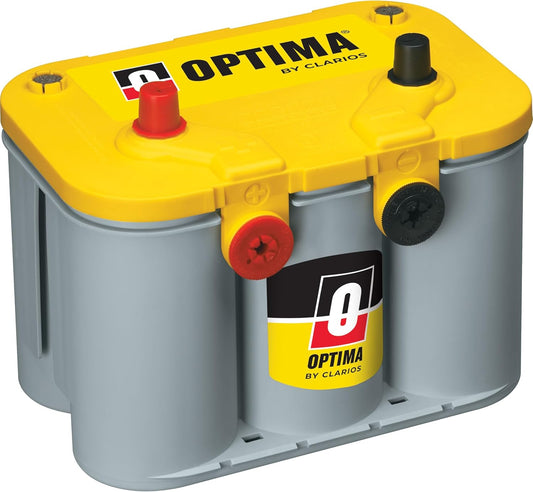
YELLOWTOP®
- Dual-Purpose Power: High-performance starting plus deep-cycle endurance.
- PUREFLOW™ Technology: 99.99% pure lead for faster cranking.
- Extreme Durability: Superior vibration resistance for high-demand use.
- SPIRALCELL® Build: Precision-wound plates for unmatched cycle life.
- Rapid Recovery: Faster recharging for vehicles loaded with electronics.
- Ultimate Reliability: Engineered to power accessories, lights, and winches.

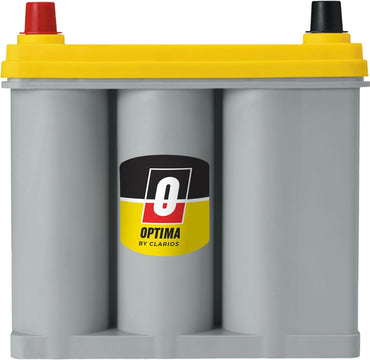


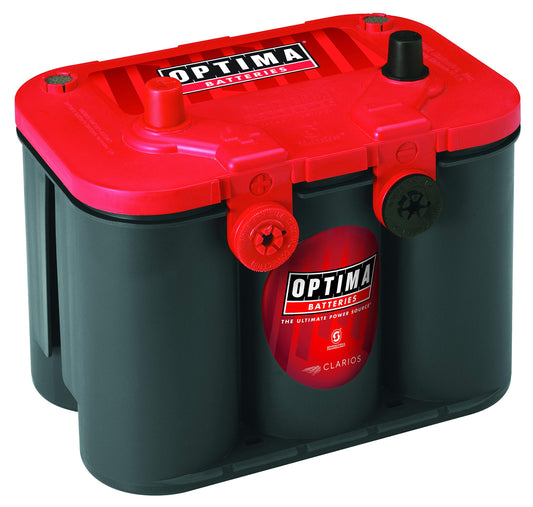
REDTOP®
- Pure Starting Power: Delivers instant ignition and exceptional reliability for cranking.
- AGM Design: Sealed construction ensures uniform electrolyte contact and improved voltage.
- Cold-Weather Performance: Optimized for superior charge acceptance and reliable winter starts.
- High Efficiency: Lower internal resistance provides faster starts and stronger power bursts.
- Extreme Durability: Built to withstand harsh vibration and demanding environments.
- Maintenance-Free: Completely sealed, spill-proof, and engineered for a longer life.

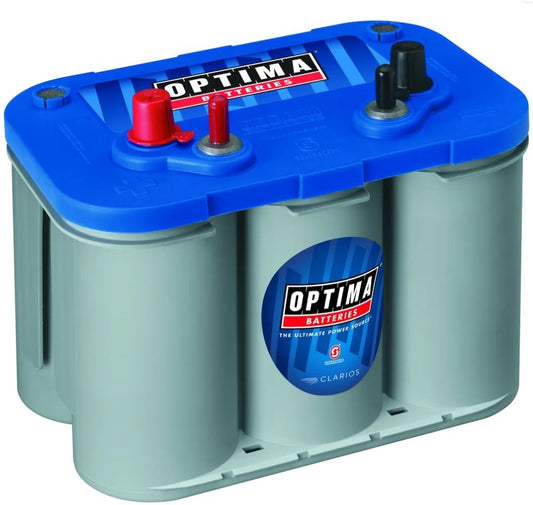
BLUETOP®
- Marine & RV Endurance: Reliable starting power and deep-cycle energy for sea or road.
- SPIRALCELL® Power: Pure-lead construction delivers clean, consistent energy for onboard systems.
- Marine-Grade Build: Precision-wound cells ensure steady voltage and long reserve capacity.
- Dual-Post Flexibility: Corrosion-resistant terminals support both starting and accessory circuits.
- Extreme Durability: Spill-proof and sealed to withstand vibration, humidity, and temperature.
- Mountable Anywhere: Flexible design allows for installation in any position with maximum endurance.




Why Optima from WCB
Your battery logistics partner: from same-day pickup to pallet drop-shipping, we simplify procurement and minimize your downtime.


Warranty and Returns
Manufacturer Backed: OPTIMA® batteries sold by West Coast Batteries, LLC are covered under the official OPTIMA Batteries Limited Warranty administered by Clarios, LLC, the manufacturer of OPTIMA batteries.
FAQs
What is an Optima battery, and what makes it different?
Optima batteries are AGM (Absorbed Glass Mat) batteries built with SpiralCell Technology — a design unique to Optima where tightly wound spiral cells made of 99.99% pure lead plates are precision-compressed inside the case. This construction gives Optima batteries a distinct advantage in vibration resistance, clean power delivery, and service life compared to conventional flat-plate batteries. A typical flat-plate battery may contain over 100 internal components; an Optima has roughly 30, resulting in a less complex and more efficient design. Optima batteries are manufactured by Clarios and sold through West Coast Batteries as an authorized distributor.
What is the difference between REDTOP, YELLOWTOP, and BLUETOP Optima batteries?
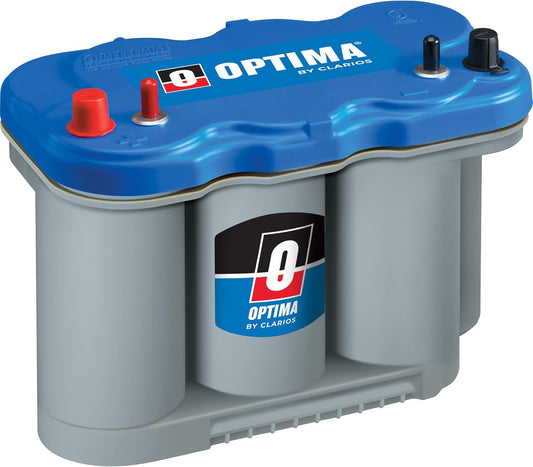
Each Optima line is designed for a specific type of use. REDTOP batteries are starting batteries — built to deliver a strong burst of cranking power and recharge quickly through the alternator. They're the right choice for vehicles with a stock or near-stock electrical system where the battery's primary job is starting the engine. YELLOWTOP batteries are dual-purpose — designed for both starting and deep-cycle use. If your vehicle has aftermarket electrical accessories like a winch, high-powered audio, inverter, snowplow, or aftermarket lighting, or if the vehicle sits unused for extended periods, YELLOWTOP handles the repeated deep discharge and recovery that a REDTOP isn't designed for. BLUETOP batteries serve marine and RV applications. BLUETOP with a dark gray case is a starting battery (internally identical to the REDTOP) with additional threaded stud terminals for marine connections. BLUETOP with a light gray case is a dual-purpose deep-cycle battery (the marine equivalent of the YELLOWTOP). The case color is the quickest way to tell them apart: dark gray case means starting only, light gray case means deep-cycle or dual-purpose.
How do I know whether I need a REDTOP or a YELLOWTOP?
If your vehicle runs a factory electrical system with no major aftermarket accessories and the battery's only real job is starting the engine, REDTOP is the right fit. Once the engine is running, the alternator takes over and keeps the battery charged — that's the scenario REDTOP is built for. Switch to YELLOWTOP if any of these apply: your vehicle has aftermarket audio exceeding 250 watts over the factory system, you run a winch, aftermarket lighting, an inverter, or a snowplow, your vehicle sits for extended periods without a battery maintainer, or you regularly use electronics with the engine off. These are deep-cycle demands, and using a starting battery (REDTOP) in a deep-cycle role will shorten its life — not because the battery is defective, but because it was designed for a different job.
What is the warranty on Optima batteries purchased from WCB?
Optima warranty periods vary by battery line and application. REDTOP batteries carry a 36-month free replacement warranty for automotive and truck starting. YELLOWTOP deep-cycle and dual-purpose batteries also carry 36 months for automotive, RV, marine, and powersports use. BLUETOP marine and RV batteries carry a 24-month warranty. For commercial or fleet use, all Optima lines carry a 12-month warranty. Coverage begins on the original purchase date, applies to the original purchaser only, and is non-transferable. Replacement batteries carry the balance of the original warranty — they do not restart the coverage period. Warranties are administered by Clarios (the manufacturer) through West Coast Batteries as an authorized distributor. Full details are available on our Optima Warranty Policy page.
How do I file a warranty claim on an Optima battery?
Bring or ship the battery to West Coast Batteries at 410 Leroy Dr, Corona, CA 92879, along with your proof of purchase (receipt or invoice). Our technicians will test the battery using an industry-standard conductance or resistance tester to confirm whether the failure is due to a manufacturing defect. If the claim is approved, a replacement battery is issued at no charge within the coverage period. The warranty does not cover normal end-of-life capacity loss, damage from overcharging, sulfation, parasitic drain, or deep discharge to 0 volts, use in an incorrect application (such as a REDTOP used in deep-cycle service), physical damage or tampering, or batteries purchased from unauthorized sellers or auction sites. Customer is responsible for removal, installation, and shipping costs.
Can I mount an Optima battery on its side or in non-standard positions?
Yes. Optima's SpiralCell construction is fully sealed and non-spillable, which allows the battery to be mounted in positions that would be impossible with a conventional flooded battery — including on its side. This is one of the practical advantages of the AGM design and is especially useful in custom builds, off-road vehicles, and marine applications where battery tray space is limited or unconventional. The only orientation Optima does not recommend is fully upside-down.
What charger should I use with an Optima battery?
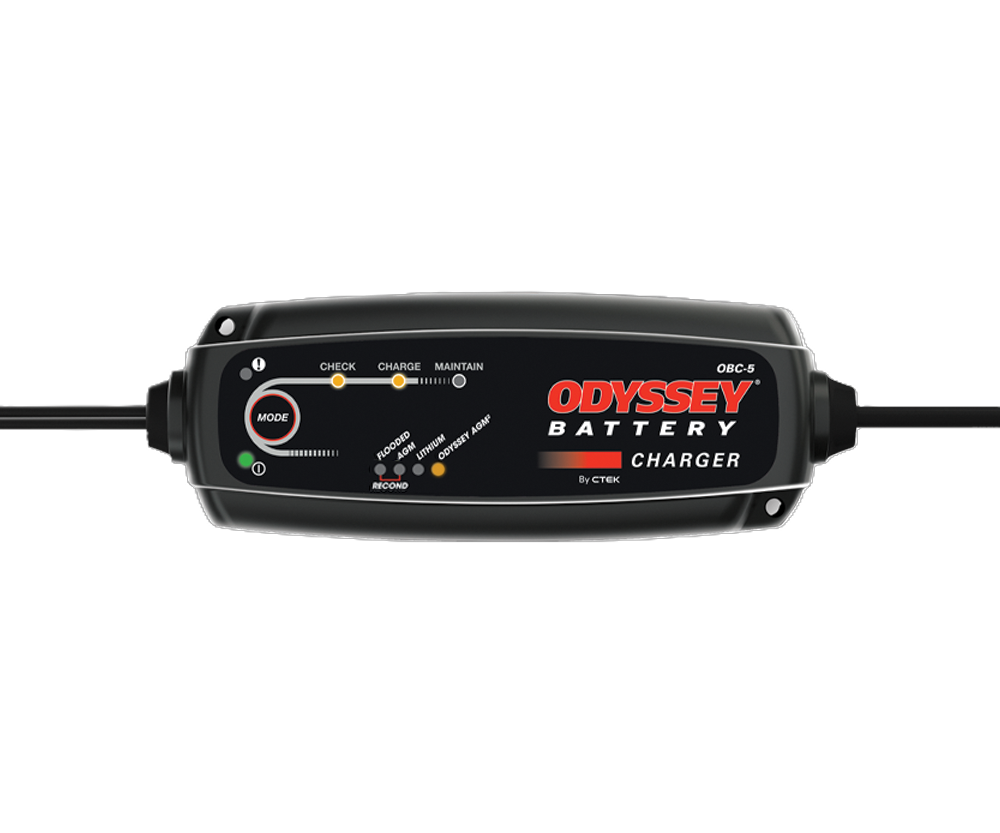
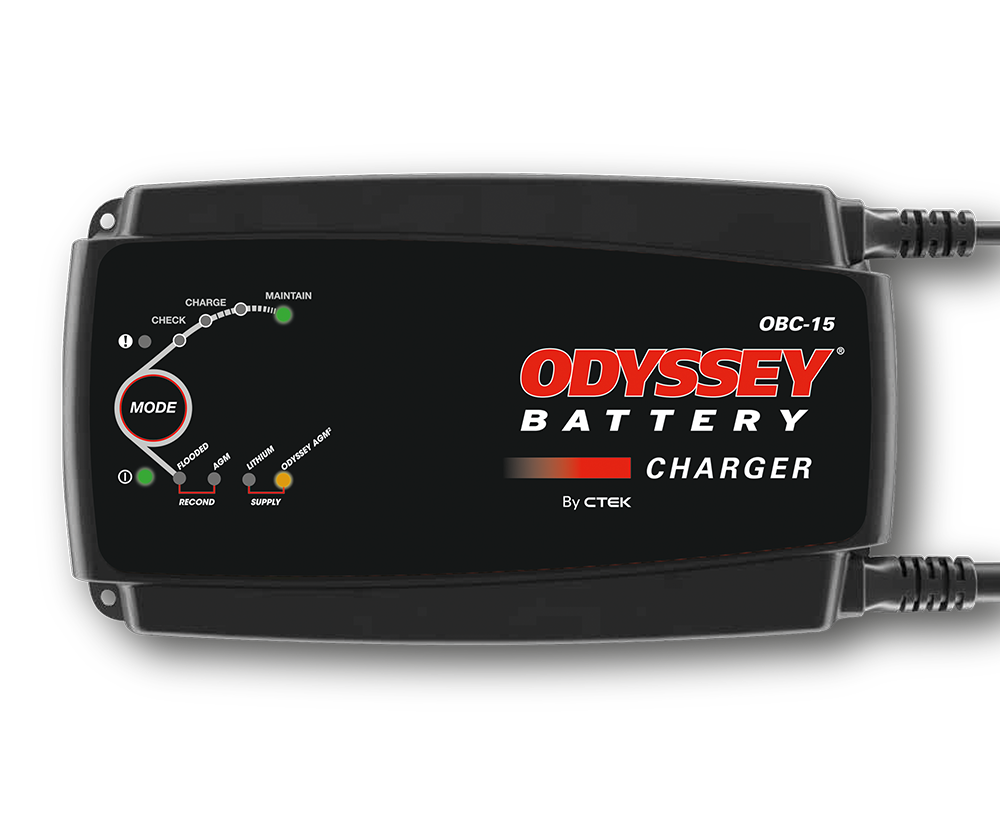
Optima batteries require a charger with an AGM-compatible charge profile. The correct charging voltage range for REDTOP and dark gray case BLUETOP (starting) batteries is 13.8–15.0 volts, with a float charge of 13.2–13.8 volts. YELLOWTOP and light gray case BLUETOP (deep-cycle) batteries should be maintained at a slightly higher resting voltage of 13.2–13.8 volts. Overcharging and undercharging are both damaging and not covered under warranty. WCB carries Odyssey OBC chargers that support AGM charge profiles: theOBC-5Afor single or smaller batteries, theOBC-15Afor most automotive and marine applications, and theOBC-25Afor larger batteries and fleet use. If a vehicle will sit unused for an extended period, connecting a maintainer or fully charging and disconnecting the battery are both effective ways to prevent discharge and sulfation.
